Second-hand karakul coat: price, what to look at and whether to buy
You can buy a second-hand karakul coat if it is in good condition: the pelt side is soft, there are no bald patches or moth damage, and no smell. Prices vary a lot and there is no single figure: it all depends on age, length and wear. Below is a checklist you can run in ten minutes and an honest look at when a new coat is the better deal.
Why people look for a used fur coat
The reasons are clear. A new natural fur coat costs serious money, and a used one can be found cheaper. Some want to try karakul without spending much. Some need a coat for a couple of seasons or for the dacha. All of these are normal reasons, and there is nothing to be embarrassed about.
Such coats are sold in OLX listings, in chats and Telegram channels, by acquaintances and in second-hand shops. The advantages are obvious: the price is lower and you can go and look. The drawbacks are there too: you are buying something whose history you do not know. So the main rule is simple: never buy a coat from a photo, always look at it in person and in daylight.
Before you go, decide two things: how much you are ready to spend in total (including cleaning and alterations) and what length and size you need. That protects you from an impulse purchase when a coat “almost fits”.
How much a second-hand karakul coat costs
The honest answer: there is no single price. It depends on how old the coat is, what karakul it is made from, its length, its size, whether it is worn and how it was stored. Two coats of the same age can cost very differently, because one lay in a garment bag and the other hung next to a radiator.
So do not rely on random figures from the internet; compare several offers with each other. If the price is suspiciously low, there are probably hidden problems: a dry pelt side, worn areas or moths. If the price is high, ask what justifies it.
One more thought. Work out the price of a used coat straight away together with the extra costs: cleaning, a new lining, adjusting it to your figure. Sometimes they eat up a large part of the difference from a new one.
Checklist: how to check a karakul coat when buying privately
Take another person with you so there is someone to look from the side, and ask to see the coat in daylight. Check in order. Do not let the seller rush you: first the overall look in the light, then the underside, then the seams and lining, then the fitting. Look at the underside at the edge of the hem or sleeve: the pelt side is easiest to see there. Do not pull or tear the fur; the check should be gentle.
- Pelt side. Look at the underside: the leather should be soft, smooth and springy. If it is dry, stiff, crackles, cracks or tears when lightly stretched, the fur has aged and will soon come apart at the seams
- Bald patches. Look at the elbows, hem, collar, sides, the spot under a bag strap and around the buttons. The fur wears out fastest there. A bald patch is not just about looks: it cannot be brought back
- Smell. Hold the coat up to your face. A musty, damp smell or a strong smell of mothballs, chemicals or perfume is a bad sign: that is how people try to cover up dampness or mould
- Lining. Check the underarms, sleeves, pockets and edges. A torn, worn or yellowed lining is not a verdict, but a reason to bargain and to count the cost
- Moths. Look for bare patches, groups of small worn spots and loose dust on the fur and in the folds. A patch eaten by moths will not grow back
- Seams. Gently pull the pelts at the joins: they should not part. Even seams show that the coat was made well
- Curl and sheen. The fur should be dense and even, with a live sheen. Dull, tangled or broken fur is a sign of wear or of a poor re-dye
- Size. Try it on. The coat should sit freely in the shoulders and sleeves and not pull. Remember that karakul is hard to let out or lengthen: there is often no spare fur
- Colour. If patches differ in shade, or dye comes off on your hand when rubbed, the fur may have been dyed, so ask about it
Documents and the seller
A coat bought privately rarely comes with a full set of papers, but ask what is left: a receipt, a label, a warranty card, information about where and when it was made. Ask the seller how old the coat is and how it was worn. If a person answers honestly, for example that the coat is ten years old, was worn only at weekends and kept in a garment bag, that is a good sign. If they dodge questions and hurry you to pay, it is better to walk away.
Do not pay in advance and do not buy a coat from photos and messages. Meet in the daytime, in a busy place or at the seller's home, and do not be shy about inspecting everything for as long as you need.
One more mistake is buying because it is “cheap”. A cheap coat with a dry pelt side ends up costing more than a slightly pricier live one: the first may come apart at the seams in the very first season, and repairing it will not be worth it.
Pros and cons of a used coat
To decide, look at both sides.
- Plus: the price is usually lower than for a new coat
- Plus: you can look at and touch the very piece you are buying
- Plus: good karakul lasts a long time by itself, and a lucky find can please you for years
- Minus: you do not know how the coat was stored and worn: hidden wear of the pelt side is not visible at once
- Minus: a private seller usually gives no warranty or returns
- Minus: size and length are hard to change to fit you, while cleaning, a new lining and repairs cost money
- Minus: the cut may look dated; that is a matter of taste, but you will be the one wearing it
When a new coat is the better deal
A new coat pays off in a few cases. If, after cleaning, a new lining and alterations, the used coat comes out close to the price of a new one. If your figure is non-standard and you need your own length, sleeves and collar. If you want to know exactly what fur the coat is made of and how it was made. If the coat is meant to last and you do not want to worry about hidden wear. And if it is a gift: not everyone wants to give someone else's coat.
A simple way to decide: take a sheet of paper and write down the price of the used coat, the cleaning, the lining and the alterations. Compare the total with the price of a new coat that fits you exactly. If the difference is small, the new one is almost always the calmer choice: you know exactly what you are getting.
A word about us, with no pressure. Luxury Furs sews new coats from Bukhara karakul by hand in Tashkent. Prices: the Champagne jacket from $3,200, the Astra coat from $3,800, the Noir from $4,200, the Royale mantle from $5,600. You can order to your measurements. We do not sell used coats and we do not repair or remake old ones: new pieces only.
If it is within your budget, come and see what new karakul looks like and compare it with what you see in listings. Just as a reference point.
Care so the coat lasts, and what to do next
Whichever coat you choose, the care rules are the same, and they greatly extend a coat's life. Store it on a wide hanger, in a cool dry place, in a breathable garment bag rather than polythene. Do not dry it by a radiator or with a hairdryer, and keep perfume and hairspray off the fur. Do not put a damp coat in the wardrobe: dry it first at room temperature. Do not carry a heavy bag on your shoulder over fur: bald patches appear there fastest. At the end of the season take the coat for professional cleaning.
If you buy a new coat from us, we give care recommendations and offer professional storage and cleaning services.
If you are hesitating between used and new, ask us. Write on WhatsApp or Telegram, call +998 97 708 91 62 or come to the atelier: Tashkent, Yakkasaroy District, Shohjahon Street 1B, Mon–Sat 10:00–18:00. Tell us what you are looking for and what your budget is: the consultant will say plainly what will suit you.
And if you have decided to buy a coat privately, simply go through the list above. Ten minutes of inspection can save you a lot of money and nerves.
Photos of the Luxury Furs collection
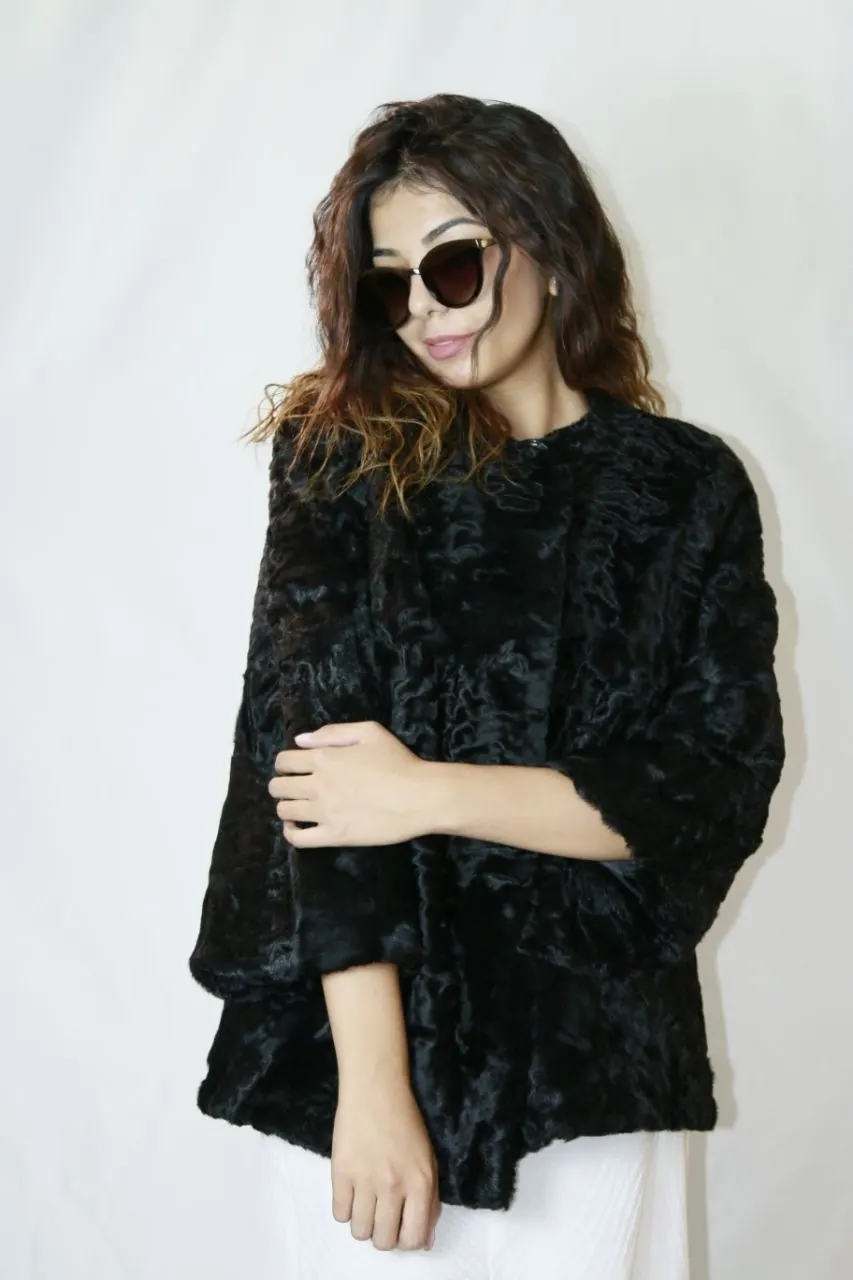
The Noir Fur Coatfrom $4,200 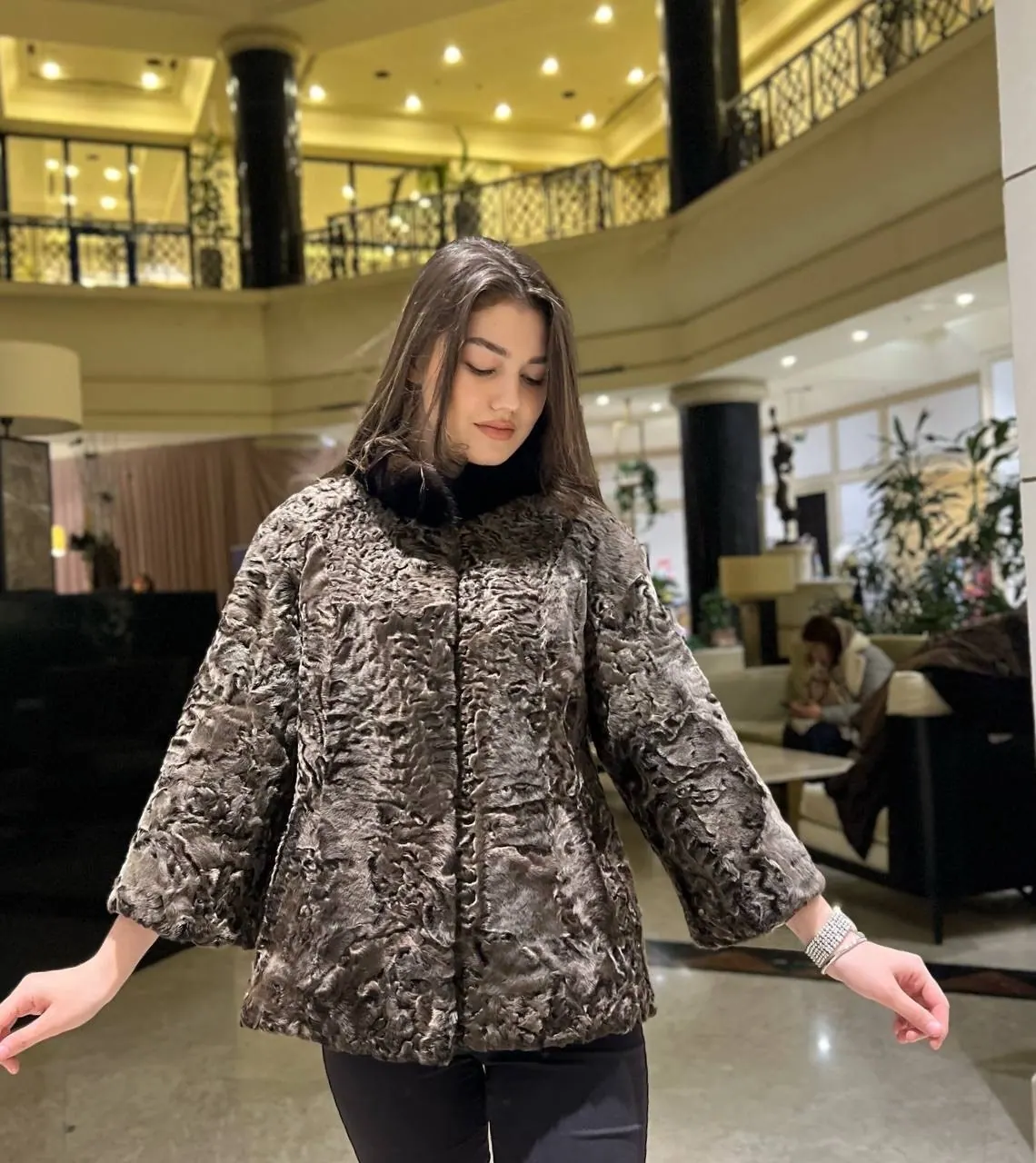
The Astra Fur Coatfrom $3,800 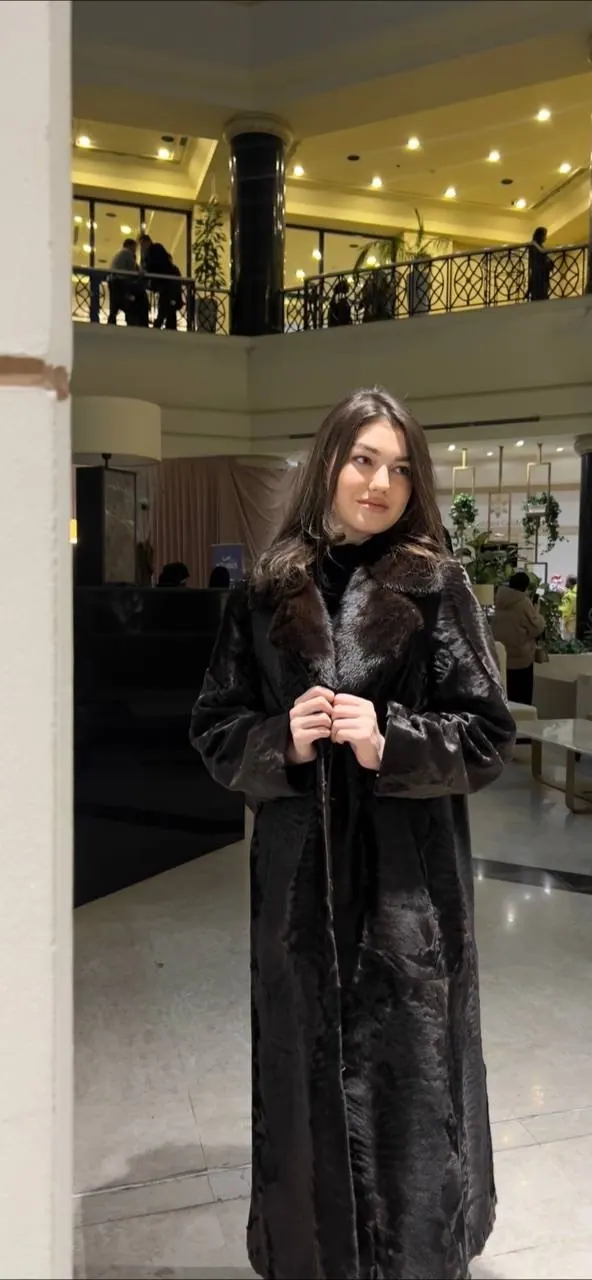
The Royale Mantlefrom $5,600 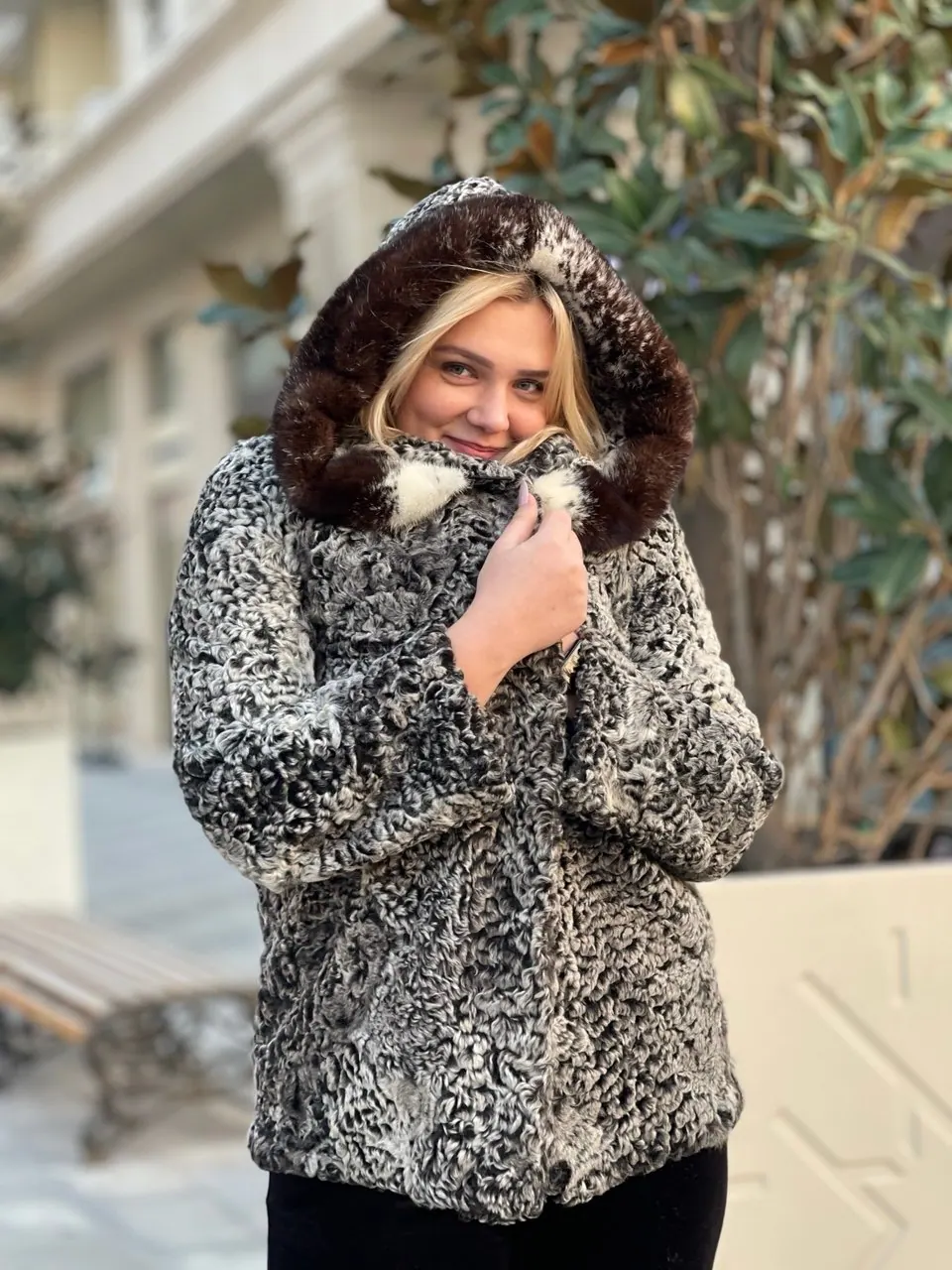
The Champagne Jacketfrom $3,200
Frequently asked questions
How much does a second-hand karakul coat cost?
There is no single price: it depends on the coat's age, length, size and wear. Compare several offers and inspect the coat in person. A very low price is a reason to look for hidden defects.
What should I look at when buying a coat privately?
The pelt side (soft, not dry, does not crackle), bald patches on the elbows, hem and collar, smell, lining, signs of moths, seams and size. Look in daylight and try it on.
What is the pelt side and why check it?
It is the leather that the fur is attached to. If it is dry, stiff and cracking, the coat is old: the fur will start to come away and the seams will part.
How can I tell moths have been at a coat?
Look for bare patches, groups of small worn spots and dust on the fur and in the folds. An eaten area cannot be restored.
How do I get rid of the smell of a used coat?
A faint smell can be helped by airing the coat in the shade and by professional cleaning. A strong smell of dampness or mould is a bad sign: better not to buy such a coat.
Is a used coat or a new one the better buy?
If the coat is in good condition and the price is fair, you can buy it. If, after cleaning and alterations, it comes out close to a new one, or you need a coat made to your measurements, a new coat to order is the better deal. Luxury Furs sews and sells only new coats, with prices from $3,200.
Book a consultation
Tell us what kind of fur coat you are looking for — our consultant will help you choose the model, shade and size. Atelier: Shohjahon Street 1B, Yakkasaroy District, Tashkent. Mon–Sat 10:00–18:00.