Natural fur coats in Tashkent: how to tell a coat is real and where to buy one
You can recognise a real fur coat by its underside: natural fur has leather there, while faux and eco fur has fabric. The hair of real fur also grows straight out of the skin, and the price is never “the price of a jacket”. Below are simple checks that do not damage the piece, and an honest look at whether natural or faux is the better choice.
In short: how to tell a natural fur coat from a faux one
If you are short on time, remember five checks. They take a minute and you need neither a magnifying glass nor experience. The main thing is not to feel awkward and to pick the coat up: a seller who is sure of the product will let you look at it calmly.
- Underside: natural fur shows leather (called the pelt side), faux fur shows fabric or knit with threads
- Hair: part the fur with your fingers. On a real coat the hair comes out of the skin; on a faux one you see a woven base
- Pattern: on a real coat the curls and hair differ slightly from pelt to pelt, on a faux one everything is identical, as if printed
- Seams: a natural coat is sewn from separate pelts, and neat joins are visible between them
- Price: if a “natural fur coat” costs about as much as a good jacket, it is most likely not natural
Underside and hair: the most reliable test
The first thing knowledgeable people do is turn back the hem or look under the lining at the edge. Real fur has leather on the reverse side: it may be soft, smooth or slightly rough, light or dark. The fur and the leather are one piece. If you see fabric, knit, mesh or a weave of threads there, you are looking at faux fur, however nicely it is named.
The second test is the hair. Part the fur with your fingers and look at where it grows from. On natural fur every hair sits in the skin and you can see skin between the hairs. On faux fur the hair is stitched into fabric, so the base looks like fabric, and sometimes the fur can be pulled out in tufts.
The tips of the hair also give a clue. On natural fur they are usually thin and slightly pointed. On synthetics the ends are often cut level and look identical, like a brush. It is not a hundred percent sign, but together with the underside it gives you a picture.
One more simple check: blow on the fur or run your hand against the direction of the hair. On a natural coat the fur parts and you can see skin and a dense undercoat below. On a faux one you more often see fabric and almost no undercoat. Do not pull or tug at the fur: looking is enough.
Do not set fur on fire and do not damage a piece in the shop. Looking at the underside and the hair is enough, and you would have to pay for a coat you have spoiled.
Other signs: price, warmth, seams
Besides the underside, a few other signs help you understand what is in front of you. None of them decides the matter alone, but if three or four agree, you can trust your eyes.
- Price. Natural fur is an expensive material and a coat is sewn from dozens of pelts. A very low price on a “real” coat is a reason to be careful and check the underside
- Warmth to the touch. Natural fur warms up quickly from your hand and stays warm. Faux fur often feels cold and “plastic”
- Sheen. On natural fur it is soft, alive, with a play of light. On synthetics it is glossy, “plastic” and the same across the whole surface
- Recovery. If you crumple the fur with your hand, natural hair usually springs back quickly
- Seams and joins. On a real coat pelts are joined by hand or machine and the joins show on the underside. Faux fur is one continuous sheet
- Smell. A new natural coat has almost no smell or a faint smell of leather. A sharp chemical smell is a warning sign, but it proves nothing by itself
- Label and documents. Ask what fur the coat is made of, where it comes from and where it was sewn. An answer of just “natural” with no details is not an answer
Eco fur or natural: what is the difference
“Eco fur” is fur made from fabric and fibres rather than animal pelts. The word “eco” sounds like “environmentally friendly”, but in essence it is faux fur. That is how it should be understood: synthetics with a nicer name. Some people choose it for ethical reasons, some for the price, and both reasons are fair.
Here is what can honestly be said. A faux coat has advantages: it is usually cheaper, brighter in colour, and no animals are needed. It also has drawbacks: faux fur often keeps heat worse, builds up static, loses its look faster and by the end of the season looks worse than at the start. It usually lasts less time because synthetic fibres crush and clump.
A natural coat costs more, but it is a piece for many years: it keeps you warm, breathes and, with normal care, holds its shape. So “eco or natural” is not a question of what is better in general. It is a question of what you need: an inexpensive piece for a couple of seasons or a coat for many years.
A faux fur coat in Tashkent: when it makes sense
A faux coat can be a sensible choice. If you need a coat for a single season, want a bright colour you will tire of in a year, or it matters to you that the fur is not of animal origin, a faux coat suits you fine. You can buy one in ordinary clothing shops.
Anyone searching for a “faux fur coat in Tashkent” should understand in advance: for a small sum you get a piece for a short time. Compare not only the price but also how many seasons you will wear it.
A plain word about ourselves: Luxury Furs does not sew or sell faux fur coats. We work only with natural karakul. If you want a faux coat, we are not the right address; if you want a natural fur coat for years, come and take a look.
What kinds of natural fur coats there are
When someone in Tashkent looks for a natural fur coat, they usually mean one of several kinds of fur. A short note on each, without advertising:
- Mink: soft, silky fur with a long pile, plush and voluminous
- Sable: dense and very warm, one of the most expensive furs
- Arctic fox and fox: long, fluffy fur, often used on collars and in full coats
- Sheepskin and mouton: sheep pelt, very warm and practical; mouton is processed to look like fur and is usually cheaper
- Karakul: fur of karakul-breed lambs: short, dense, with a curl pattern, light and durable
Where to buy in Tashkent, what to ask and how to book a viewing
In Tashkent you can buy a natural fur coat in fur salons, in ateliers that sew to order and from private sellers. One rule applies everywhere: look and try on in person. A photo shows neither the underside, nor the seams, nor the weight.
Before buying, ask a few simple questions: what fur the coat is made of, where the fur comes from, where the coat was sewn, whether you can see the underside and seams, what the final price is and how to care for it. If the seller answers confidently and shows the piece without hurrying, that is a good sign.
Luxury Furs makes karakul fur coats from Bukhara. We have worked with karakul since 1998 and sew by hand in Tashkent. Prices: the Champagne jacket from $3,200, the Astra coat from $3,800, the Noir from $4,200, the Royale mantle from $5,600. These are “from” prices, and the consultant names the final cost. We do not make mink, sable or arctic fox: only karakul.
If you would like to see real karakul with your own eyes, come to the atelier: Tashkent, Yakkasaroy District, Shohjahon Street 1B. We are open Monday to Saturday, 10:00 to 18:00, closed on Sunday. You can look at the fur, check the underside, feel the seams and try a coat on.
If you are not in Tashkent, write on WhatsApp or Telegram or call +998 97 708 91 62: a consultant will tell you about the models and how to order with delivery within Uzbekistan. While you are not buying anything, you can ask as many questions as you like.
Photos of the Luxury Furs collection
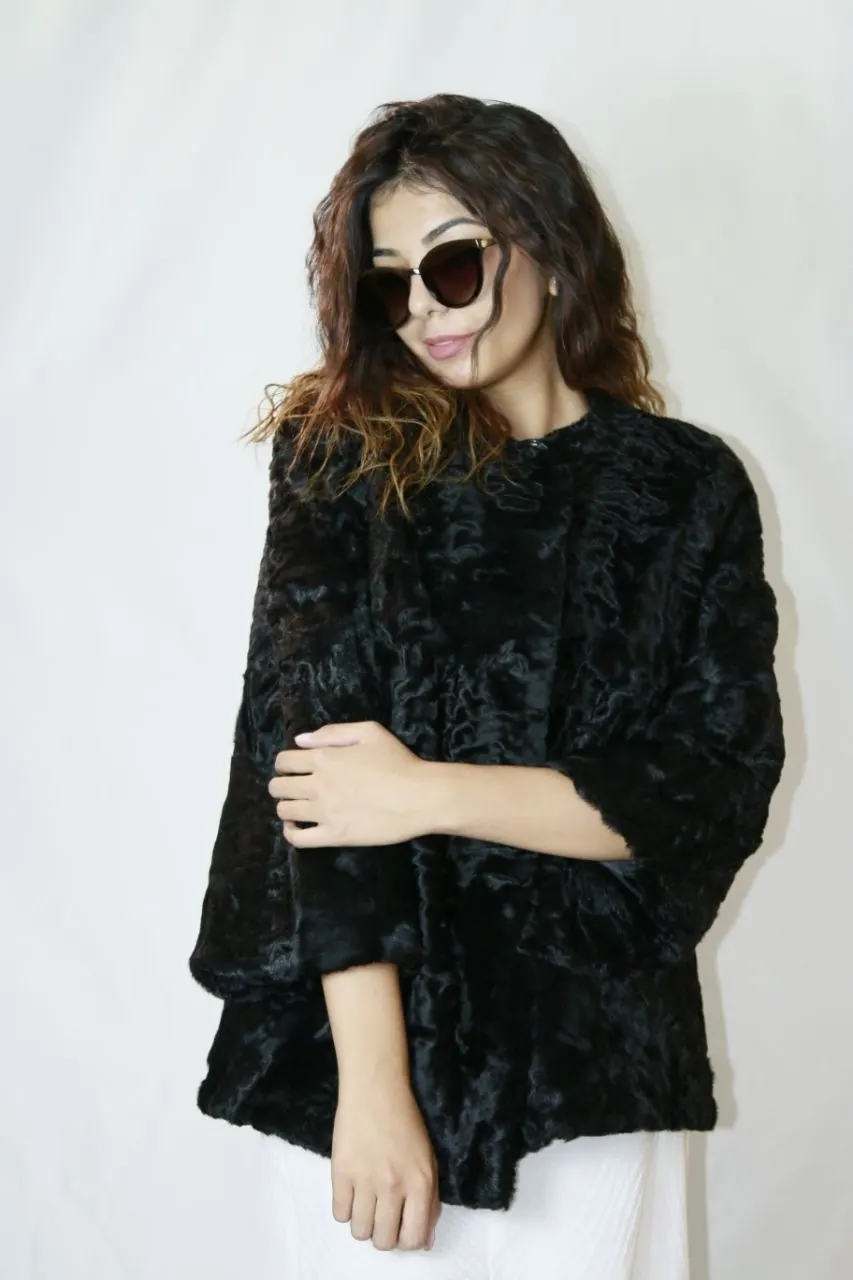
The Noir Fur Coatfrom $4,200 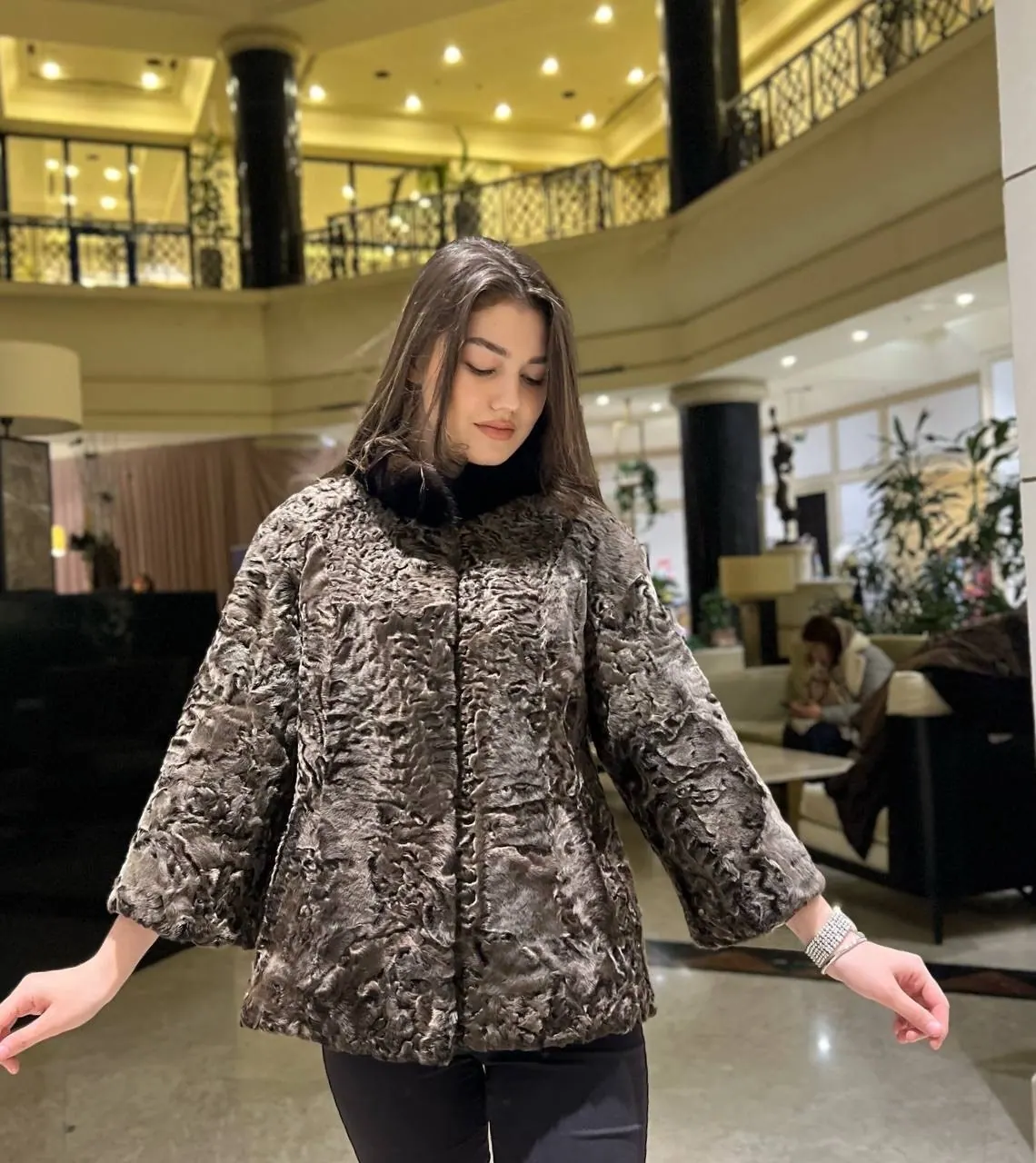
The Astra Fur Coatfrom $3,800 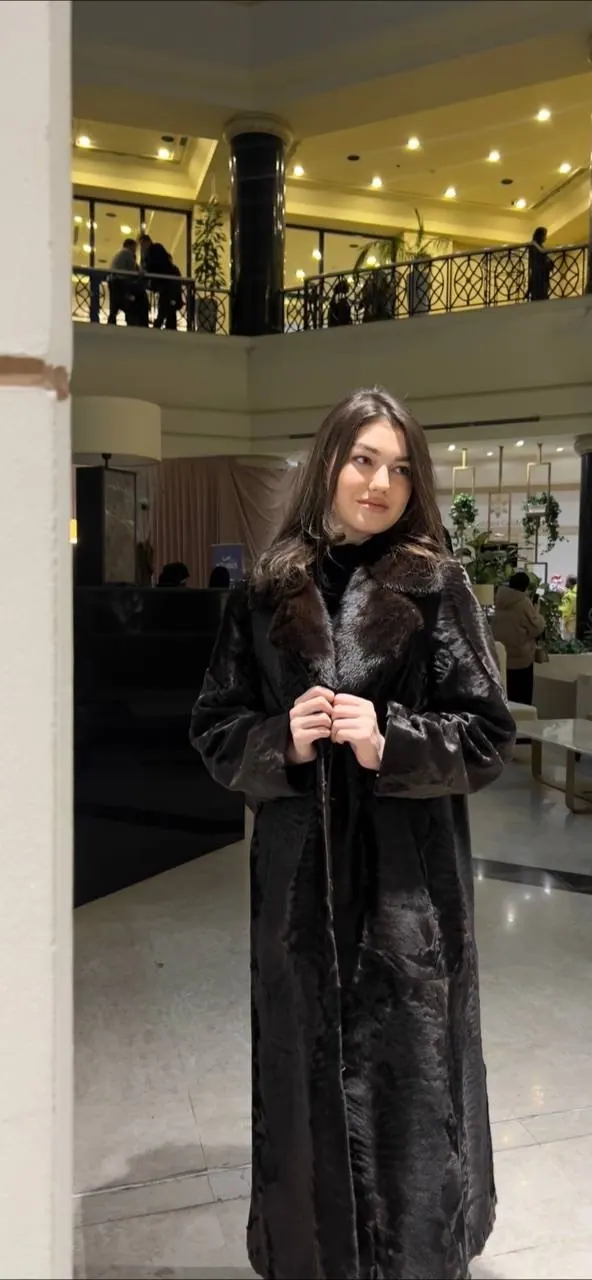
The Royale Mantlefrom $5,600 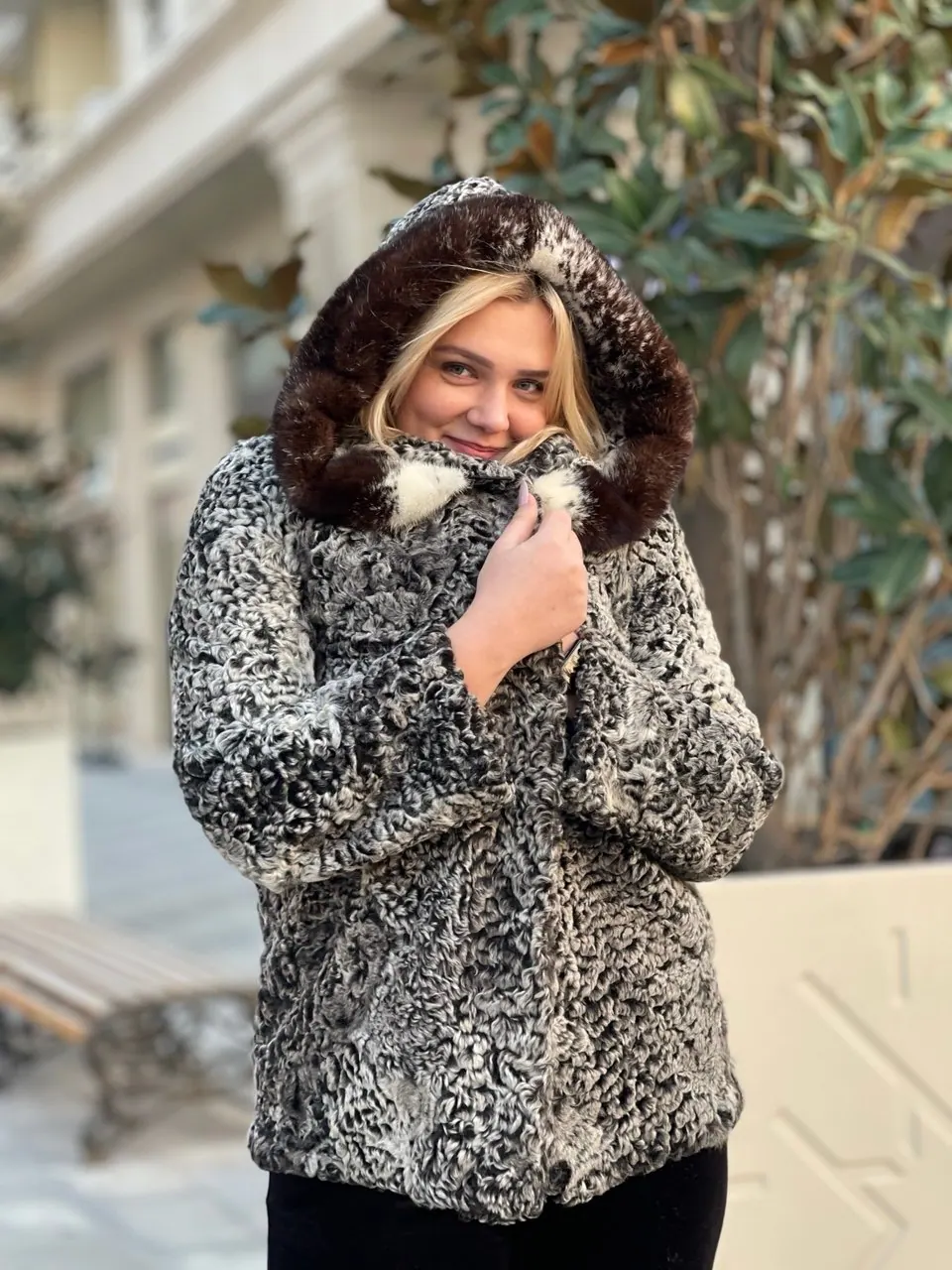
The Champagne Jacketfrom $3,200
Frequently asked questions
How can I tell a natural fur coat from a faux one?
Look at the underside: natural fur has leather, faux fur has fabric. Part the hair: on a real coat it grows out of the skin. Check the price as well: a very low price on a “natural” coat is a reason to be careful.
Is an eco fur coat natural?
No. An eco fur coat is faux fur made from fabric and fibres. The word “eco” usually refers to the fact that the fur is not of animal origin.
Real or faux fur coat: which is better?
It depends on the goal. Faux is usually cheaper and fits a couple of seasons, natural costs more but lasts many years and keeps you warmer.
Where can I buy a natural fur coat in Tashkent?
In fur salons, ateliers and from private sellers. Luxury Furs sews coats from Bukhara karakul: Tashkent, Yakkasaroy District, Shohjahon Street 1B, Mon–Sat 10:00–18:00.
Do you sell faux fur coats?
No. Luxury Furs works only with natural karakul from Bukhara and does not sell faux fur.
How much does a natural fur coat cost in Tashkent?
The price depends on the fur, length and size. At Luxury Furs karakul pieces start from $3,200: the Champagne jacket from $3,200, the Astra from $3,800, the Noir from $4,200, the Royale mantle from $5,600.
Book a consultation
Tell us what kind of fur coat you are looking for — our consultant will help you choose the model, shade and size. Atelier: Shohjahon Street 1B, Yakkasaroy District, Tashkent. Mon–Sat 10:00–18:00.